1 John 5:7–8
The KJV names the Father, the Word and the Holy Ghost. The NIV’s main text is shorter. It still has verses 7 and 8; its footnote records the longer reading.
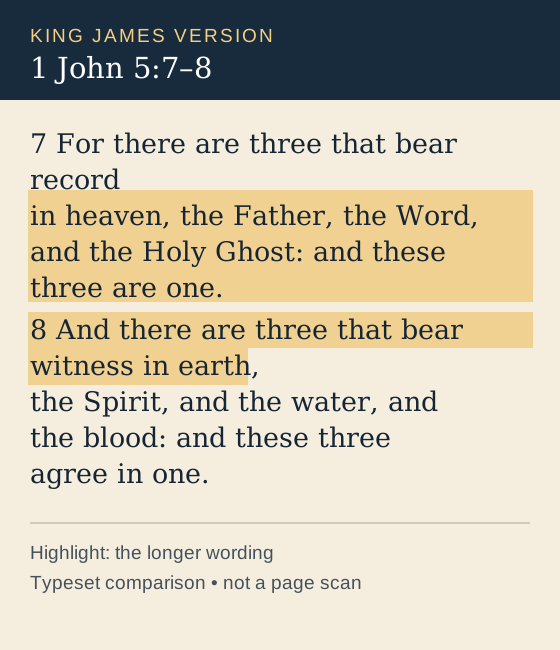
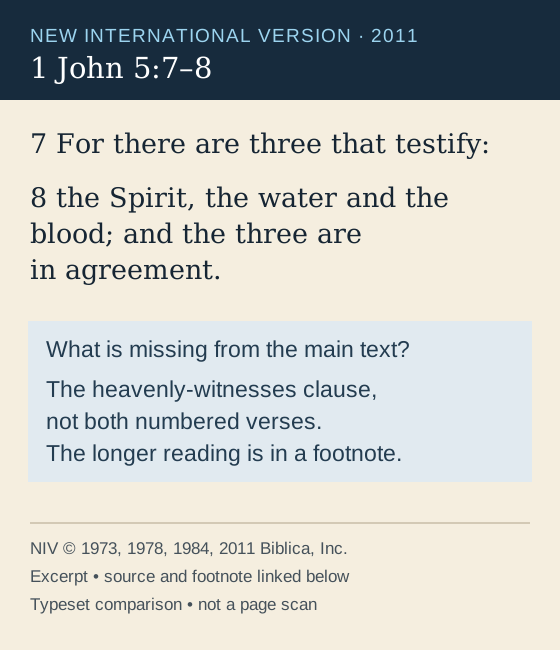
Typeset illustrations, not photographs. Open the linked editions to read the context and notes.
The question
Read and compare
Read John 1:1–18 in the KJV and a modern translation. Write down which edition you use. Compare verse 18 and read its notes. English words can differ for more than one reason.
Evidence
The KJV wording
John 1:18 uses “the only begotten Son.” Read the whole paragraph. It tells us about the Word, his relation to God, and his becoming flesh. Keep this in mind as you compare the words.
Read the KJV passage →Evidence
Another English Bible
The ESV publisher’s page checked for this study uses “God the only Son.” We can see that the words differ. That alone does not tell us why a translator chose them. Check the edition and its notes.
Read the publisher’s ESV text →Evidence
Two kinds of questions
A translation puts words from one language into another. A different question asks what words the writer first wrote. Old copies can differ too. Our study of 1 John 5:7 looks at that second question.
Study a difference between old copies →The strongest challenge
Can different words change the meaning? Yes. A choice made by a translator may be good or bad. Read the verses around it, check the source words, and look for the translator’s reason.
What the evidence supports—and what remains open
These English phrases show a real difference. By themselves, they do not settle what John first wrote in Greek. They also do not prove that every modern Bible is wrong or that a translator meant to weaken a Bible teaching.
Follow the evidence
What does the evidence show?
No score and no forced answer. Use the sources above to weigh the claim.
- Check the source. Read the linked passage or record in context. Note its edition, date and language where relevant.
- Test the explanation. Compare the strongest challenge with what the source actually shows. Which point does it support, and which point needs more evidence?
- Choose your next step. Record the question you still need answered below, then follow a source or the next related study.
Your study notebook
What do you think—and what is still unclear?
You do not have to fill this in. Nothing you write here is sent to Daniel. Saved notes stay in this browser on this device, not on your other devices. Anyone using this browser may be able to read them.