A Protestant crown
James ruled a Protestant kingdom. English Catholics had hoped he would ease restrictions on their worship. Many faced fines and other penalties.
London · the night of November 4–5, 1605
Guy Fawkes, King James and the Bible
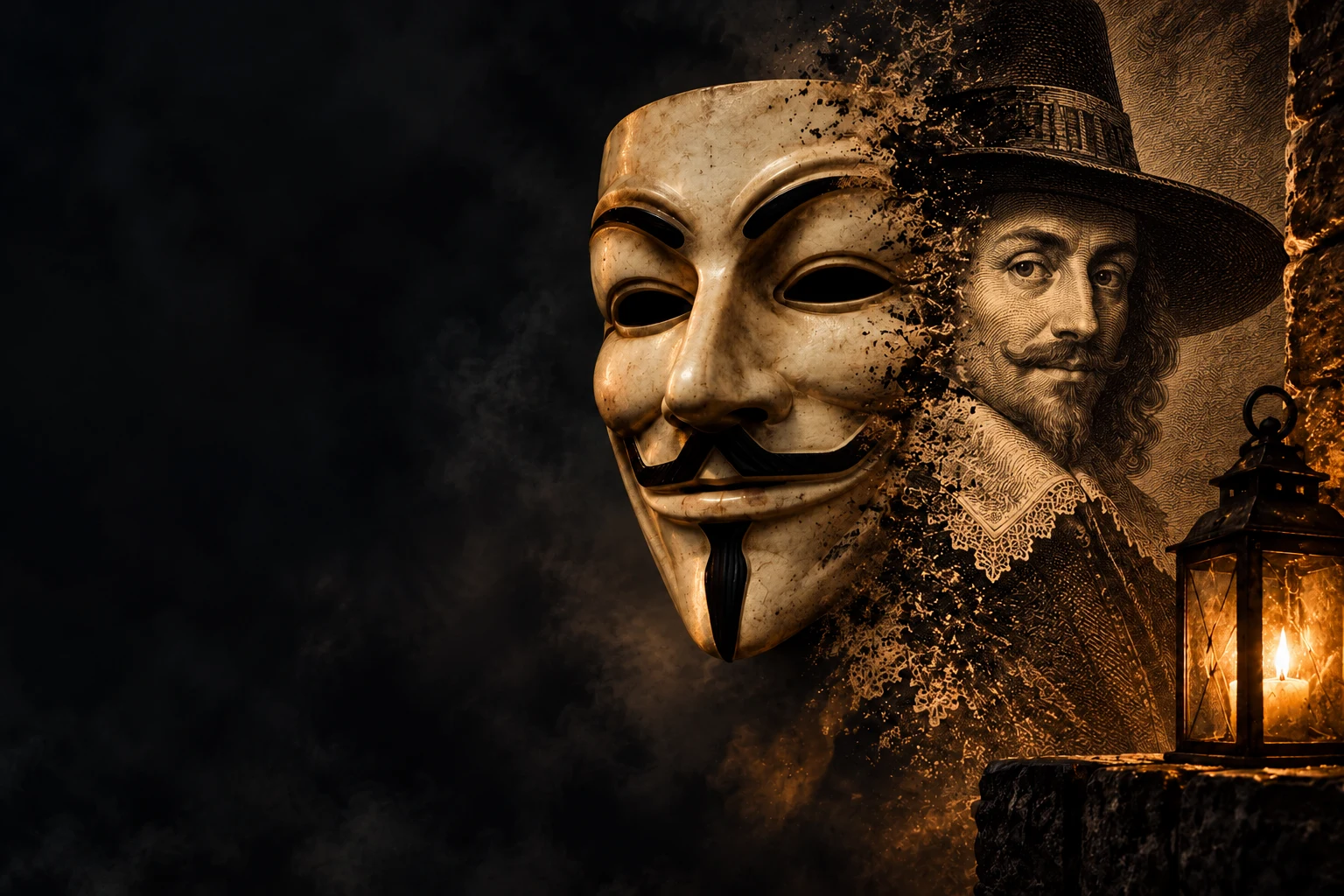
You recognise the face.
Do you know the plot?
The king they planned to kill had already commissioned a new English Bible.
Explore the storyOriginal illustration · not an archival portrait
The face you recognise
You may know the mask from V for Vendetta. In that story, a masked figure fights a fictional government. The historical Guy Fawkes lived four hundred years earlier.
He was part of a small group of Catholic conspirators led by Robert Catesby. Their plan was to blow up Parliament during its opening ceremony on November 5, 1605.
The intended victims included King James I. That is the same James whose name appears on the King James Bible.
The danger beneath their feet
The target was more than one man. The attack was meant to destroy the king and the assembled political leadership.
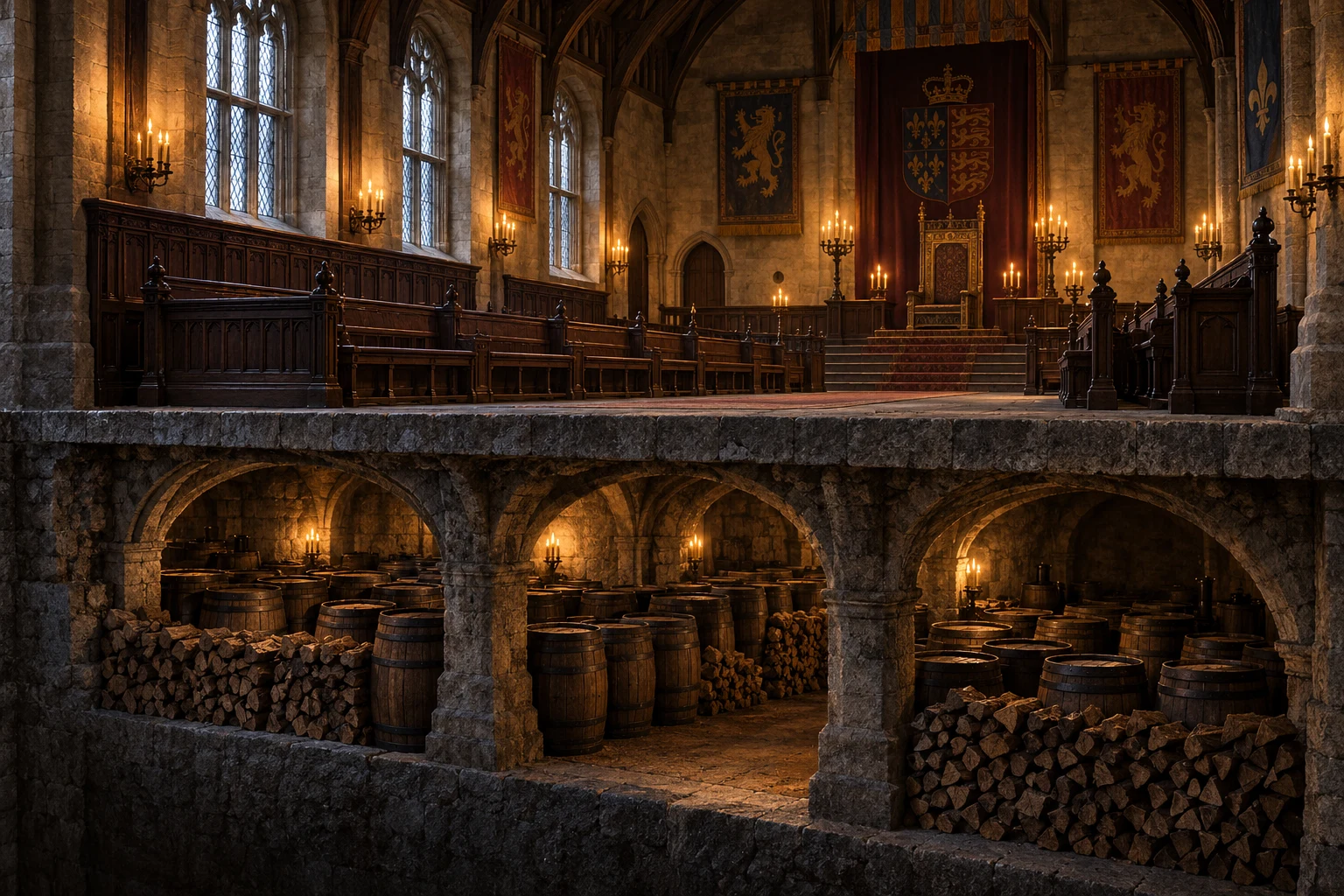
The king, lords and commons were to gather for the ceremony.
Fawkes was found guarding the hidden explosives before the attack could happen.
The plotters hoped to follow the explosion with an uprising and a Catholic restoration.
Illustrative Bible scene · not a scan of the 1611 edition
The connection you may never have heard
In 1604, James approved a new Bible translation at Hampton Court. Scholars began the work that would reach print in 1611.
The Gunpowder Plot fell between those dates. The Bible project was already underway when its royal sponsor was threatened.
The decision at Hampton CourtJames approves the new English Bible.
The intended attack is stopped.
The translation appears in print.
Faith, power and allegiance
Religion and government were tightly joined. For the plotters, changing the ruler was a way to change the nation’s religion.
James ruled a Protestant kingdom. English Catholics had hoped he would ease restrictions on their worship. Many faced fines and other penalties.
Catesby’s group chose violence to change that situation. Their religious aims matter. So does the difference between their actions and the beliefs of every Catholic.
After the plot, an oath required Catholics to affirm loyalty to James and reject the Pope’s power to remove him. Royal and papal authority were part of the conflict.
The Catholic identity of the plotters does not establish a papal order. Parliament’s history says that some priests, including Jesuit superior Henry Garnet, knew something of the discussions and tried to discourage them.
Garnet’s knowledge and conduct became subjects of accusation and examination. A fair account checks each person’s actions. It does not turn membership in a church into proof of directing a conspiracy.
The sources linked on this page do not establish that the Pope ordered the Gunpowder Plot.
Priests and the plans Read Garnet’s examinationJames himself recognised that most Catholics were loyal. The aftermath nevertheless brought more restrictions and long-lasting suspicion.
Loyalty, the oath and the aftermathThe night before November 5
A warning reached Lord Monteagle, a Catholic nobleman. The letter urged him to stay away from Parliament.
On the night of November 4–5, searches uncovered Fawkes and the gunpowder. The planned explosion never happened.
November 5 became a yearly thanksgiving for the king’s deliverance. Bonfires followed. Later celebrations also expressed hostility toward Catholics, including the burning of figures of the Pope.
Follow the evidence
The history is serious enough to tell accurately.
He had already commissioned the translation that bears his name. Catholic conspirators sought to overthrow his Protestant government.
The overlapping dates do not establish that motive or a papal command. Those claims need evidence of their own.
For readers of the King James Bible, this is part of the world in which it was produced. The argument for its text and translation still needs to be examined on its own evidence.
Continue through Bible historyStart with a document. Use the histories to understand its setting.
Explains how V for Vendetta used the Fawkes mask and how its meaning changed.
Open sourceIdentifies Catesby’s leadership, the intended attack, and priests who knew something of the plans and tried to discourage them.
Open sourceFollow the Monteagle letter and its role in uncovering the threat. A warning is evidence of the plot, not evidence of every later accusation.
Open sourcePlaces James’s decision to commission a new English translation at Hampton Court in 1604, before the plot was discovered.
Open sourceThe exhibition describes correspondence organising the translators in 1604 and records the path toward the 1611 Bible.
Open sourceRead what Garnet said under examination. Accusations, knowledge, approval and leadership are different questions.
Open sourceRecords James’s recognition that most Catholics were loyal, alongside the restrictions and oath that followed.
Open sourceExplains the annual thanksgiving, bonfires and later burning of papal effigies. Later customs should not be mistaken for the plot itself.
Open sourceThe mask and cutaway are original illustrations. The linked archives supply the historical documents; the illustrations are not facsimiles.